Only five freshmen have ever been named the college basketball national player of the year. Cameron Boozer accomplished that feat this past season, joining Kevin Durant, Anthony Davis, Zion Williamson, and Cooper Flagg in the process. Boozer’s lone season in college was one of the best in NCAA history, but the Duke product still fell all the way to pick three in the 2026 NBA Draft. This comes just one year after Flagg, a fellow Duke hooper, went first overall in the draft. So, why didn’t Boozer hear his name called until the Memphis Grizzlies were on the clock at pick three?
Cameron Boozer had an incredible career at Duke
Over the last 20 years or so, freshmen have ruled the top of the draft, whereas upperclassmen have often experienced draft-day slides. Older players have less time to develop once getting to the professional ranks, whereas players still in their teenage years are often believed to have sky-high potential. National players of the year like Jalen Brunson and Luka Garza fell in their respective drafts because of this mindset. They were both upperclassmen with skillsets that many college scouts thought were better suited for the college game than the NBA when they declared for the draft, and neither of them was selected until the second round. Of course, Brunson just led the New York Knicks to their first NBA Finals victory since 1973, proving scouts don’t always have everything right.
Unlike many national player of the year winners, though, Boozer didn’t win the award as an upperclassman; he won it as a freshman. Durant, Davis, Williamson, and Flagg were not only all selected first overall after accomplishing that feat, but they were all considered among the most highly touted prospects in league history. Many view Boozer as the most sure thing in this 2026 NBA Draft class, but the same level of prospect prestige wasn’t put on his name.
At first glance, Boozer appears to be another great prospect. His averages of 22.5 points, 10.2 rebounds, and 4.1 assists per game were incredible, especially for a frontcourt player. His Blue Devils were one of the best teams in the nation, and Boozer has NBA bloodlines. Cameron’s dad, Carlos Boozer, was a two-time All-Star who played 13 years in the NBA. The genetics are evident, as Cameron’s twin brother, Cayden, is also a fellow NBA Draft prospect.
The newest Grizzlies player has an advanced offensive game. Boozer can obviously bang down low and score in the painted area, but he can also step outside and knock down jump shots. He gives his all on the glass, his playmaking is advanced for a big man, and he has done nothing but win throughout his entire career. The intangibles seem to be there with the Duke product.
Why did Cameron Boozer fall to the Grizzlies at pick three?
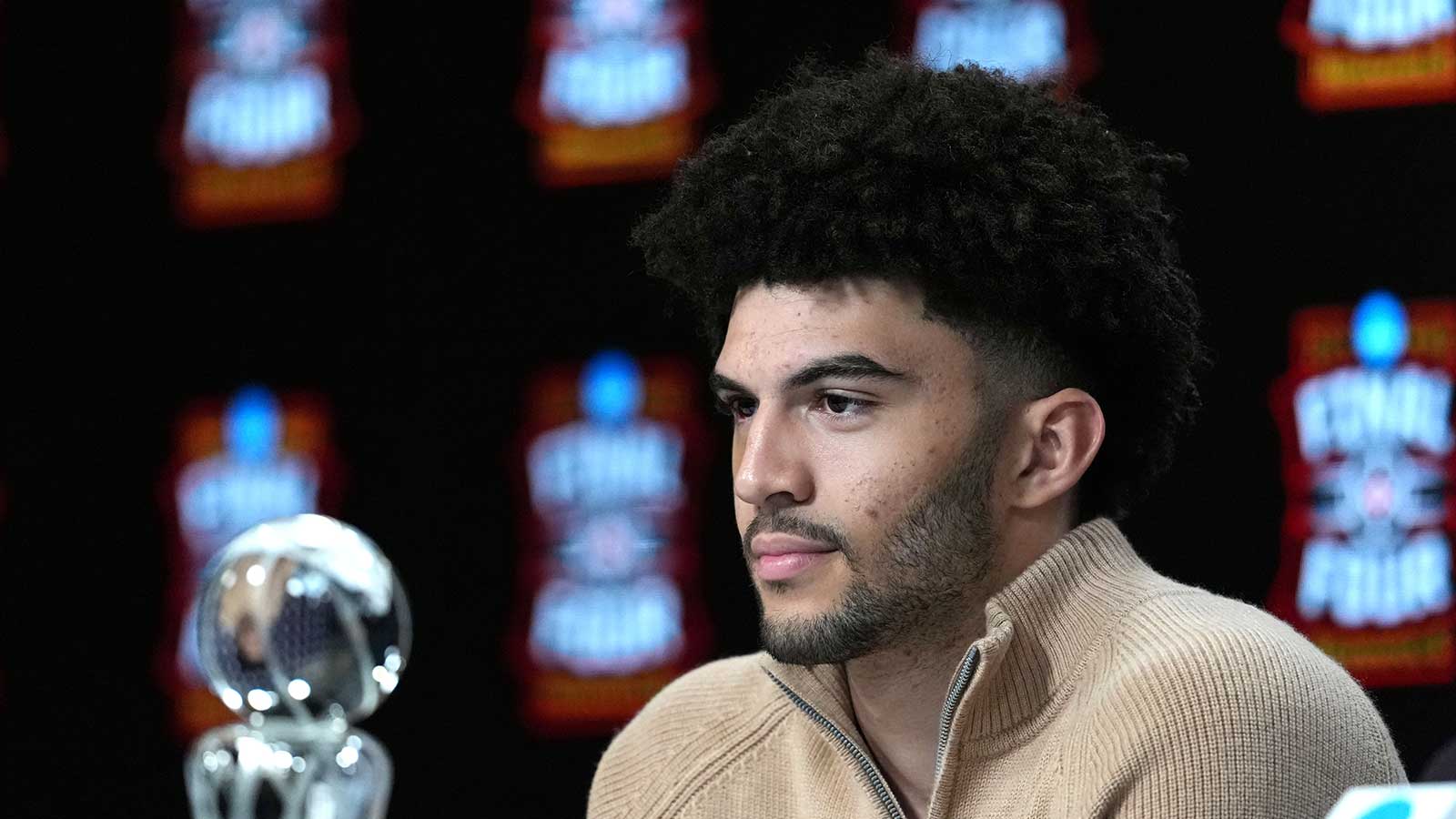
Despite all of the positives of Boozer’s draft profile, he is far from a perfect prospect. For starters, there are concerns that he is a tweener at the next level. The number three pick has a somewhat outdated skill set that may have been best suited for the early 2000s or late ’90s. His 3-point shot helps ease concerns about his preference to post-up, but the defense is a bigger worry.
Boozer is limited as an athlete. Some also think he is too slow to guard power forwards, but too short and not enough of a rim protector to guard centers. What Boozer brings to the hardwood is enough to convince most in basketball circles that he will at least have a long and productive NBA career, but his ceiling seems limited.
AJ Dybantsa’s freakish athleticism and Darryn Peterson’s two-way potential led to their selections ahead of Boozer. Plenty of experts even pinned Caleb Wilson as the better prospect in comparison to Boozer. Regardless, the Grizzlies have embraced a rebuild of sorts, and although Ja Morant is still on the roster, Boozer can be seen as the future of the franchise going forward. Perhaps he can pull a Brunson and prove he was underrated and underdrafted coming off a national player of the year award.
The post Why Cameron Boozer fell to Grizzlies despite historic Duke season on par with Cooper Flagg appeared first on ClutchPoints.