The Cleveland Guardians have spent the past few seasons threading a needle: staying competitive on a modest payroll while trying to grow enough impact bats from within. As their young core matures, the glaring hole remains the same, a proven right-handed power presence who can lengthen the lineup in October. With the Chicago Cubs increasingly open to exploring the market for Seiya Suzuki, Cleveland has a rare opportunity to match need with value and put a real offer on the table.
Why the Guardians should target Suzuki
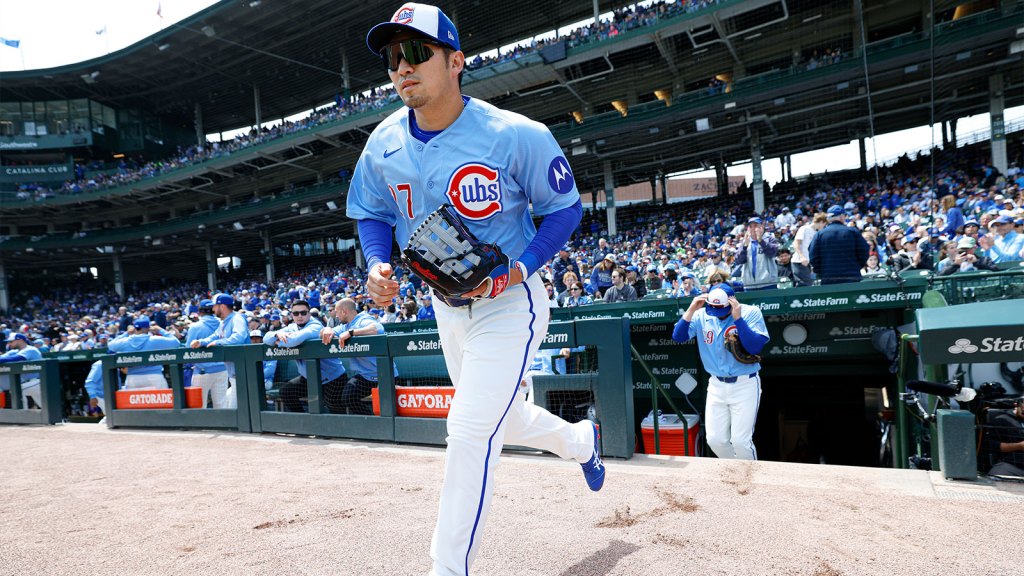
The Guardians have pitching, contact, and athleticism; what they lack is thunder. Even after internal breakouts, this offense still leans heavily left-handed and can get exposed by elite southpaws in tight games. Suzuki directly addresses that issue as a right-handed hitter with on-base skills and 25–30 homer power when he’s right, and he’s shown he can be more than a platoon bat against top-end velocity.
From Chicago’s side, the calculus is shifting. Suzuki is headed toward free agency next winter, carries a full no-trade clause, and his market value is tied to a walk year where the Cubs are at risk of losing him for nothing if they stand pat. If Jed Hoyer and Carter Hawkins are going to act, they’re going to want an offer that’s heavy on upside and close-to-MLB talent.
Why the Cubs are motivated sellers
There are two layers to Chicago’s urgency: performance and leverage. On the field, Suzuki has fallen off his 32-homer breakout, posting a more modest slash line and a dip in damage in big spots, including a subpar OPS with runners in scoring position this year. That’s not enough to tank his value, but it does nudge the Cubs toward viewing him more as an asset to be optimized than a core piece to be extended at all costs.
Contractually, the no-trade clause complicates but doesn’t kill the idea of a deadline deal. Suzuki can effectively guide the process, but he may actually have incentive to approve a move to a contender because midseason trades remove him from qualifying-offer eligibility this winter. For the Cubs, that means there is a narrow window where they can (a) get real prospect capital, and (b) avoid the risk of a down second half dragging his free-agent stock down further, shrinking the market and their options. That’s where Cleveland walks in with exactly the type of controlled upside Chicago should be targeting.
The perfect trade offer
Here’s the package that threads the needle for both front offices and passes the sniff test analytically:
Guardians receive:
- OF Seiya Suzuki
Cubs receive:
- OF Jace LaViolette
- RHP Daniel Espino
From the Cubs’ perspective, this is about recalibrating their window. LaViolette gives Chicago a potential middle-of-the-order bat of the future, a power-driven corner outfielder with the kind of offensive ceiling you rarely get in a rental return. Even if there’s swing-and-miss baked in, his physicality and power profile fit nicely at Wrigley, and he effectively backfills Suzuki’s role on a much cheaper, longer control timeline.
Espino is the high-variance, high-upside arm every seller dreams of prying loose. When healthy, his repertoire fits the modern prototype: elite fastball, wipeout breaking ball, and strikeout rates that pop in any model. Yes, the injury history is real and terrifying, but that’s precisely why a team like Cleveland might be more open to moving him now, they’ve built enough pitching depth to withstand the loss. For the Cubs, this is a calculated risk on ceiling: if Espino even gets close to his pre-injury form, they’ve added a potential frontline arm without paying free-agent prices.
For Cleveland, this is a classic “push the chips in without emptying the drawer” move. LaViolette and Espino are premium pieces, but they are also lottery tickets in terms of health and development timeline. Suzuki, by comparison, is plug-and-play — he walks into right field on Day 1, lengthens the lineup behind José Ramírez, and gives Terry Francona (or his successor) a stabilizing presence in the middle third of the order. If the Cubs kick in a bit of cash to offset the remaining portion of Suzuki’s sub–$6 million deadline hit, the financial side lines up cleanly for a Guardians club that operates in a tighter budget lane.
The final hurdle is Suzuki’s no-trade clause, but Cleveland checks a lot of boxes: competitive club, clear everyday role in right field, and a situation where a strong second half and postseason run can make him one of the more intriguing bats on the winter market. If the Cubs decide to sell and the Guardians are serious about maximizing this window, a Suzuki-for-LaViolette-and-Espino framework is the kind of “perfect offer” that forces both sides to say yes.
The post Guardians’ perfect trade offer for Cubs’ Seiya Suzuki appeared first on ClutchPoints.