The Buffalo Bills entered the 2026 offseason determined to reinvent themselves. Sure, stars such as Josh Allen, James Cook, and Greg Rousseau remain firmly entrenched as cornerstones. However, roster-building in today’s NFL is often defined by difficult decisions. As the Bills move beyond minicamp and toward training camp, two respected veterans find themselves in increasingly vulnerable positions. Neither player has performed poorly. Yet roster economics and emerging competition could leave Mitch Wishnowsky and Ty Johnson fighting for their NFL futures.
Buffalo’s offseason reset
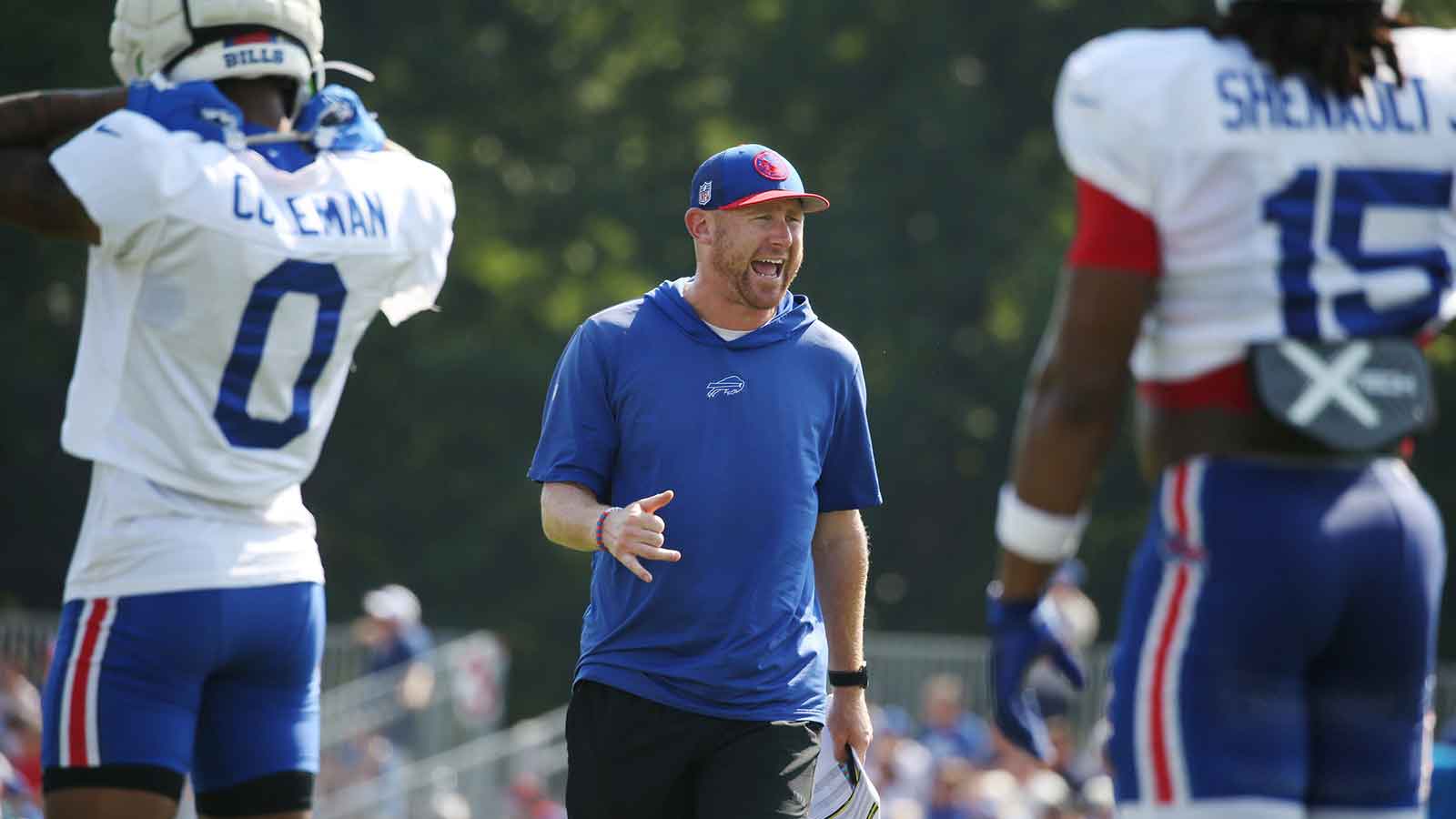
The Bills underwent a pretty dramatic organizational transformations during the 2026 offseason. After parting ways with longtime head coach Sean McDermott, Buffalo elevated offensive coordinator Joe Brady to the top job. He immediately began reshaping the roster around his vision. General manager Brandon Beane made several headline-grabbing moves. The most notable was acquiring wide receiver DJ Moore from the Chicago Bears. That gives Josh Allen another elite weapon in the passing game.
The front office also addressed key depth concerns through free agency. Safety CJ Gardner-Johnson brought versatility and attitude to the secondary. Cornerback Dee Alford, center Lloyd Cushenberry, and offensive lineman Austin Corbett added valuable experience and flexibility.
The draft further reinforced Buffalo’s evolving identity. Beane repeatedly traded back to maximize value before selecting Clemson edge defender TJ Parker and Ohio State cornerback Davison Igbinosun to help build the foundation of the team’s new 3-4 defense.
The result is a roster loaded with competition. While that is generally a positive development, it also means veterans who once seemed secure can suddenly become expendable.
PK Mitch Wishnowsky
That reality places veteran punter Mitch Wishnowsky in a precarious position heading into training camp. His experience, professionalism, and ability to handle adverse weather conditions made him a dependable asset for a team with championship aspirations. However, dependability alone is not always enough in a salary-cap-driven league.
The Bills are searching for long-term solutions throughout the roster. That includes special teams. Younger punters entering camp offer significantly lower financial commitments. They can also provide developmental upside that could appeal to the front office. When evaluating specialists, teams often prioritize cost efficiency unless there is a dramatic difference in performance. That dynamic creates a difficult challenge for Wishnowsky.
The financial implications only strengthen the case. Moving on from the veteran would create meaningful cap savings with minimal dead money attached. For the Bills, every dollar matters.
The situation becomes even more complicated because Buffalo’s roster is built to contend now. If younger specialists demonstrate comparable skills, the front office could decide the savings outweigh the value of veteran experience. None of this diminishes what Wishnowsky has brought to the organization. It simply reflects the harsh reality of modern roster construction.
RB Ty Johnson
The more difficult decision may involve current RB2 Ty Johnson. Unlike Wishnowsky, Johnson’s value extends well beyond a single specialized role. He has become one of Buffalo’s most reliable complementary offensive pieces. He contributes as a runner, receiver, and pass protector.
Last season, Johnson proved why coaches trust him in critical situations. He produced more than 450 yards from scrimmage and remained one of the team’s most dependable third-down options.
Yet his roster outlook is more uncertain than many fans realize. The primary issue is financial. Johnson carries a cap figure that stands out on a roster increasingly focused on maximizing efficiency. As such, Buffalo’s front office may conclude that younger, cheaper alternatives can replicate much of his role at a fraction of the cost.
That possibility becomes more realistic when examining the current running back room. Cook remains the centerpiece. Additional depth options have impressed throughout early workouts. If Buffalo believes it can replace Johnson’s production internally, the financial incentive to move on becomes significant.
The cap savings generated by a release could be redirected toward positions where depth is more difficult to find. Teams chasing a championship constantly search for ways to optimize every roster spot, after all. Johnson’s contract may place him directly in that conversation.
What makes this scenario particularly challenging is that Johnson has done very little wrong. He remains productive and respected within the locker room. Unfortunately, roster decisions are not always based solely on performance.
Difficult decisions

Every offseason creates winners and losers long before Week 1 arrives. The Bills have assembled a roster capable of competing for a Super Bowl. Maintaining that status, though, requires difficult choices. Brandon Beane and Joe Brady must balance immediate production with long-term sustainability.
That balancing act places both Mitch Wishnowsky and Ty Johnson in uncomfortable territory. Wishnowsky faces mounting pressure from younger and cheaper specialists. Johnson remains a productive contributor, but the economics of the position may ultimately work against him.
Neither player should be considered a lock to be released. Training camp and preseason performances will ultimately determine their fate. However, these two veterans could become casualties of the Bills’ ongoing roster transformation.
The post 2 Bills in danger of getting cut after 2026 minicamp appeared first on ClutchPoints.